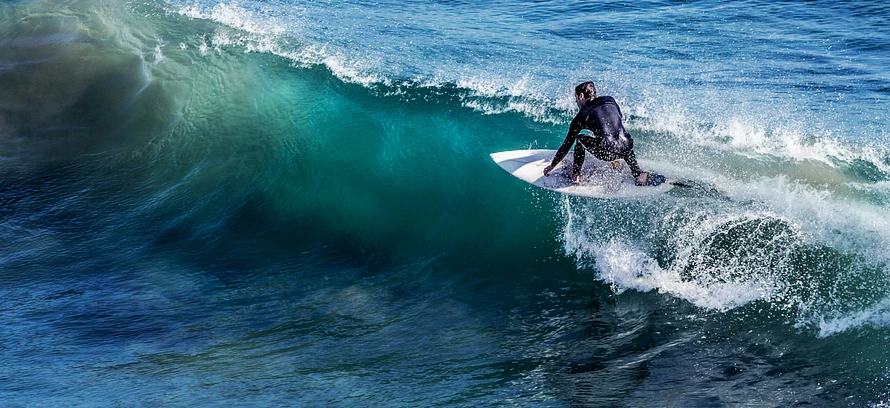
Ask ten longboarders what trim means and you'll get ten answers, all of them circling the same thing: the moment the board finds the exact place on the wave where it wants to be, and you stop fighting it.
This piece is about that word — where it came from, why it nearly disappeared, and why the best surfers alive still organize their whole approach around it.
WHEN TRIM WAS SURFING
In the 1950s and early '60s, before the shortboard made surfing about the vertical, trim was surfing. A good ride was a long, quiet, unbroken line — speed generated by position rather than by pumping. You didn't attack the wave. You arranged yourself so it carried you.
“Trim is the closest surfing gets to sailing: you are not powering the board, you are arranging yourself so the wave does.”
THE NEAR-DISAPPEARANCE
When the shortboard revolution arrived, trim went out of fashion almost overnight. For twenty years the currency was the turn — tighter, higher, more radical. Longboarding survived those decades in the hands of a small, stubborn group who kept riding the old way on the old equipment.
WHAT IT MEANS NOW
When longboarding came back in the 1990s, it came back as a discipline about style rather than maneuvers — and style, at its root, is just trim held under pressure. That's the thread this journal keeps pulling. The people we interview all, in their own vocabulary, keep describing the same line.
By Tupi Cabrera. Longboardarian, June 2026.